Through the decades of using the BFRs and teaching about them in courses, I have come to view the Willow state as one of the most destructive when it comes to relationships.
Someone in this mood has been hurt in some way, but holds a grudge which festers within. It’s “the other person’s fault” that the person has been dealt a blow, big or small. They are the victim, they harbour the grievance, and expect an apology. That makes one dependent upon the behaviour of others to let go of resentment, bitterness, animosity, feelings of spite, hostility, and resentment. Because often the apology does not come.
That sequence can become internalised, meaning people habitually blame others for their ill will and, in the process, relinquish their sense of being self-responsible, but they don’t realise they are doing this. They don’t notice that in their unaware state. Donald Trump is a grand master of the Willow state; everything that is not working optimally is Joe Biden’s fault. Putin comes a very close second; it’s Europe’s fault that there is a war in Ukraine; he did not start the war. Of course not.
In a Willow state, a rift between people involved opens up, and the longer it is there, the more difficult it is to bridge the divide.
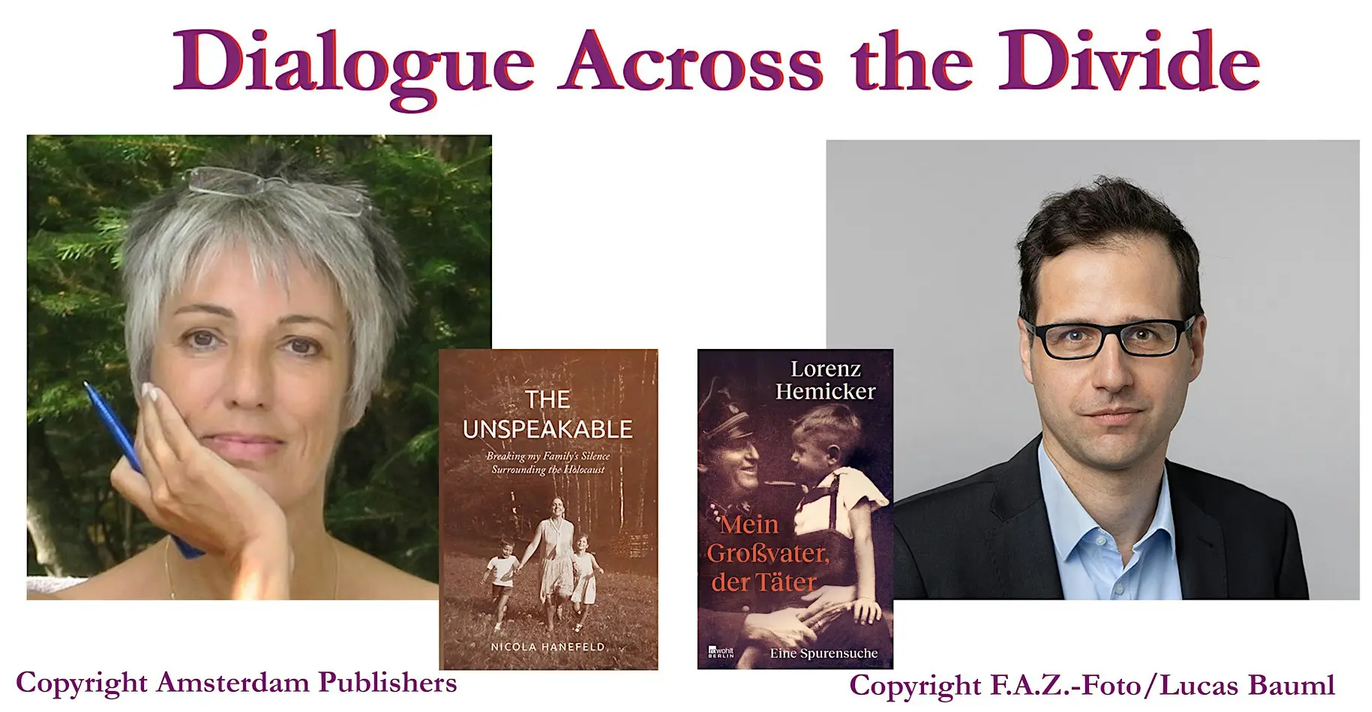
I’m looking forward to speaking to Lorenz Hemicker on 8 December during an online event organised by the Second Generation Network.
His grandfather was a perpetrator during WWII. As many of you know, some members of my family were murdered during the Holocaust. But there we will be, Lorenz and I, in conversation with one another, and I will not be in a Willow state. We will practise bridging the divide through talking.